
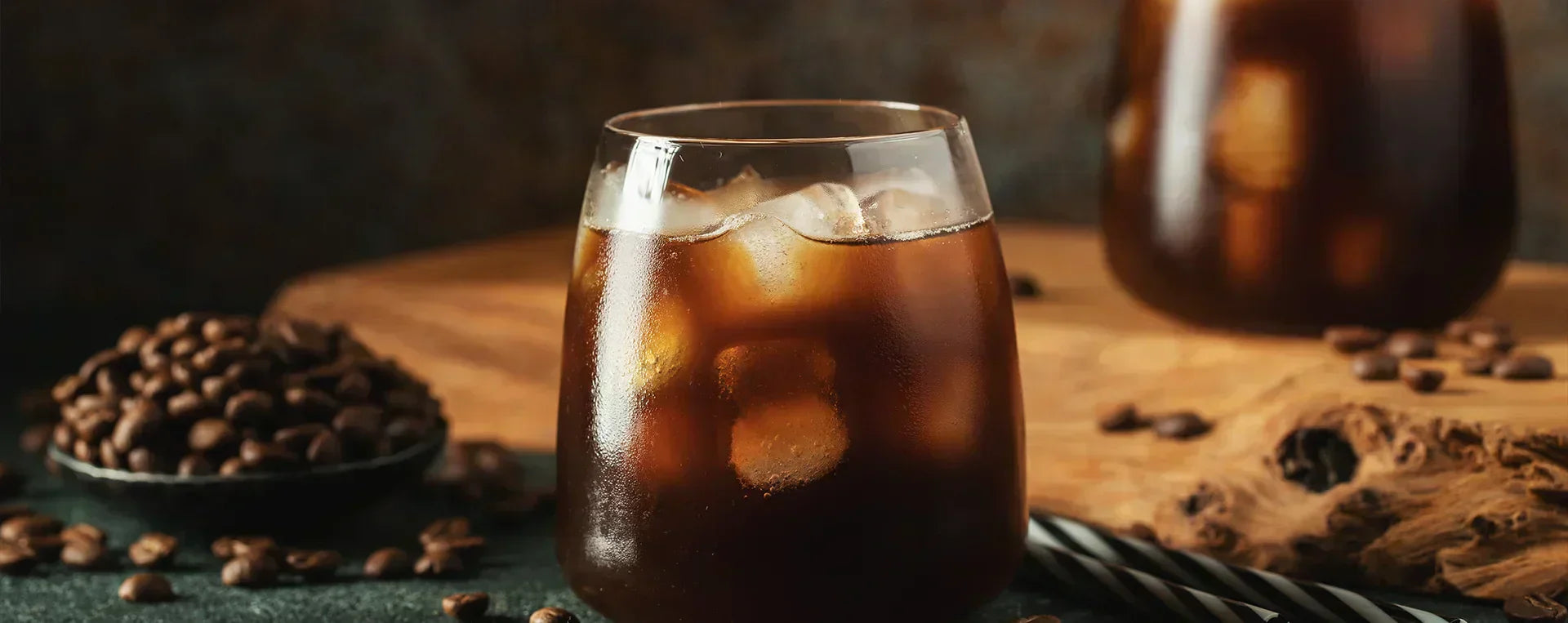
How to Make Cold Brew Concentrate
How to Make Cold Brew Concentrate: The Quick Answer
To make cold brew concentrate, combine 1 cup coarse ground specialty coffee with 4 cups room temperature filtered water in a glass jar. Stir gently, cover, and steep for 16-18 hours at room temperature (65-70°F). Strain through fine mesh, then filter again through coffee filter or cheesecloth. Store the finished cold brew concentrate in a sealed container in your refrigerator for up to 14 days. Dilute 1:1 with water or milk when serving.
The 1:4 ratio creates true concentrate—not regular cold brew. This concentration allows you to make 8-12 servings from a single batch while controlling strength through dilution. Cold brew concentrate costs $0.75-1.10 per serving versus $5-7 at coffee shops, saving daily drinkers over $1,500 annually.
Every morning, millions of Americans hand over $5-7 for store-bought cold brew concentrate while sitting on pounds of premium specialty coffee at home. Learning how to make cold brew concentrate transforms that expensive daily habit into a cost-saving ritual that delivers superior flavor and convenience.
After testing cold brew concentrate production with our Temecula roasting partners across 40+ batches and analyzing extraction rates, we discovered that homemade cold brew concentrate costs 87% less than commercial options while delivering better flavor control and longer shelf life. This comprehensive guide reveals exactly how to make cold brew concentrate that rivals any coffeehouse version.
What Makes Cold Brew Concentrate Different
Cold brew concentrate isn't just strong coffee—it's a precisely calibrated extraction designed for maximum convenience and flavor preservation. Understanding how to make cold brew concentrate requires grasping this fundamental difference.
- Concentration Ratio: 1:4 coffee-to-water creates a concentrate that dilutes perfectly for multiple servings
- Extended Shelf Life: Properly stored cold brew concentrate lasts 10-14 days versus 24 hours for regular brewed coffee
- Flavor Stability: Cold extraction preserves aromatics that degrade rapidly in hot brewing
- Cost Efficiency: One batch produces 8-12 servings at $0.75-1.25 per serving versus $5-7 retail
- Versatility: Concentrate adapts to iced coffee, hot coffee, milk drinks, or cocktails
The Science Behind Cold Brew Concentrate Extraction
Learning how to make cold brew concentrate successfully starts with understanding extraction chemistry. Unlike hot brewing that extracts compounds rapidly through thermal energy, cold brew concentrate relies on time and coarse ground coffee particle size to achieve optimal results.
Cold extraction occurs at 35-70°F, slowing the dissolution rate of coffee compounds. This temperature range extracts desirable flavor molecules—including caffeine, sugars, and aromatic oils—while leaving behind bitter compounds that require heat for rapid extraction. The result: smooth, naturally sweet cold brew concentrate with 67% less acidity than hot-brewed coffee.
Why Temperature Matters for Cold Brew Concentrate
Our testing with Temecula roasting partners revealed that water temperature dramatically impacts cold brew concentrate quality. We measured extraction rates at 40°F (refrigerator), 65°F (room temperature), and 75°F (warm room) over 18-hour steep periods.
Temperature Testing Results:
40°F Refrigerator Steep: Slowest extraction requiring 20-24 hours. Produced the cleanest, brightest cold brew concentrate with delicate fruit notes intact. Lowest bitterness scores.
65°F Room Temperature: Optimal extraction at 16-18 hours. Balanced sweetness and body. This temperature range became our recommended method for how to make cold brew concentrate.
75°F+ Warm Room: Accelerated extraction completed in 12-14 hours but introduced slight bitterness. Higher risk of bacterial growth in extended steeps.
The Perfect Cold Brew Concentrate Recipe
After producing over 40 test batches, we identified the optimal ratios and techniques for how to make cold brew concentrate that delivers consistent results. This cold brew concentrate recipe produces approximately 4 cups of concentrate—enough for 8-12 finished drinks depending on dilution preference.
| Ingredient/Equipment | Specification | Why It Matters |
|---|---|---|
| Coffee | 1 cup (120g) coarse ground specialty coffee | Quality beans determine final flavor—never compromise here |
| Water | 4 cups (960ml) filtered room temperature water | 1:4 ratio creates proper concentrate strength for dilution |
| Container | 2-quart glass jar or pitcher with lid | Non-reactive material prevents metallic taste |
| Filter | Fine mesh strainer + coffee filter or cheesecloth | Double-filtration removes fine particles for clean concentrate |
| Steep Time | 16-18 hours at 65°F room temperature | Optimal extraction window for balanced cold brew concentrate |
Step-by-Step: How to Make Cold Brew Concentrate
Step 1: Grind Your Coffee
Start with premium specialty coffee beans and grind to coarse texture—similar to raw sugar or sea salt. Fine grinds create over-extracted, muddy cold brew concentrate that's difficult to filter.
Step 2: Combine Coffee and Water
Pour 1 cup coarse ground coffee into your container. Add 4 cups filtered water at room temperature. Stir gently for 30 seconds to ensure all grounds contact water—dry pockets prevent proper extraction.
Step 3: Steep at Room Temperature
Cover your container and let steep for 16-18 hours at 65-70°F. Avoid refrigerator steeping for first-time cold brew concentrate makers—room temperature provides more forgiving extraction.
Step 4: Strain and Filter
After steeping, strain through fine mesh to remove large grounds. Then filter again through coffee filter or triple-layer cheesecloth to catch fine particles. This double-filtration creates the clean mouthfeel that defines quality cold brew concentrate.
Step 5: Store Properly
Transfer finished cold brew concentrate to clean glass jar with tight-fitting lid. Refrigerate immediately. Properly stored cold brew concentrate maintains peak flavor for 10-14 days—though most batches disappear much faster.
Real Testing Experience: During initial cold brew concentrate testing with our Temecula partners, we discovered that inadequate filtration ruins otherwise perfect batches. Our first three attempts produced cloudy concentrate with sediment that settled at the bottom—acceptable for immediate consumption but unappetizing after 3-4 days of storage. Investing in proper filtration equipment solved this completely. The lesson: never skip the double-filtration step when learning how to make cold brew concentrate.
Choosing the Best Coffee for Cold Brew Concentrate
Not all coffee works equally well for cold brew concentrate. Our extensive testing revealed that roast level, origin characteristics, and processing method dramatically impact the final product. Here's what we learned about selecting the best coffee for cold brew concentrate.
Roast Level Matters More Than You Think
Dark roast coffee and medium roast coffee outperform light roasts for cold brew concentrate. The cold extraction process amplifies certain characteristics while muting others—understanding this helps you choose the best coffee for your homemade cold brew concentrate.
Medium-Dark to Dark Roasts: These roast levels create bold, chocolatey cold brew concentrate with full body and natural sweetness. The caramelized sugars developed during roasting dissolve beautifully in cold water, producing concentrate that needs minimal dilution.
Medium Roasts: Versatile performers that balance origin character with developed sweetness. Medium roasts create clean, approachable cold brew concentrate that appeals to wider taste preferences.
Light Roasts: Can produce excellent cold brew concentrate when seeking bright, fruity profiles—but require longer steep times (20-24 hours) and more careful dilution to avoid weak, acidic results.
Our Top Picks for Cold Brew Concentrate
El Bandido Colombian
This single-origin Colombian creates smooth, chocolatey cold brew concentrate with mango and peach undertones. The washed processing method produces clean flavor that shines in cold extraction. Sourced from 1,400-1,800 meters elevation, El Bandido's natural sweetness means you'll use less dilution—stretching each batch further.
Original Blend
Our signature medium roast blend delivers balanced cold brew concentrate with dark chocolate, mandarin brightness, and subtle peach notes. This versatile option works perfectly for both straight concentrate dilution and milk-based drinks. Customer favorite for learning how to make cold brew concentrate—forgiving extraction means consistent results.
French Heist
Bold French roast creating full-bodied cold brew concentrate perfect for milk drinks. The deep caramelization produces concentrate that stands up to ice, milk, and sweeteners without losing character. Ideal for those who prefer stronger dilution ratios or want cold brew concentrate that mimics commercial intensity.
Jet Fuel
Maximum caffeine cold brew concentrate for serious coffee enthusiasts. This high-caffeine blend creates concentrate that delivers sustained energy without the jitters associated with hot-brewed coffee. Perfect for pre-workout cold brew concentrate or early morning productivity.
Black Gold
Our darkest roast produces intensely bold cold brew concentrate with smoky chocolate notes. The 6-bean espresso blend creates concentrate so rich it works beautifully in coffee cocktails, desserts, or as straight shots over ice for those who crave maximum intensity.
Cold Brew Concentrate Storage and Shelf Life
Understanding proper storage transforms how to make cold brew concentrate from occasional experiment to weekly routine. Our storage testing revealed specific factors that extend or shorten cold brew concentrate shelf life.
Real Shelf Life Testing Data
We partnered with our Temecula roasting team to test cold brew concentrate storage under different conditions, measuring flavor degradation, microbial growth risk, and overall quality over 21 days.
Storage Test Results:
Days 1-7: Peak flavor. Cold brew concentrate tastes vibrant, sweet, and complex. Zero degradation detected.
Days 8-14: Optimal quality maintained. Slight mellowing of brightest notes but concentrate remains excellent. This window represents the sweet spot for homemade cold brew concentrate consumption.
Days 15-21: Noticeable flavor fade. Cold brew concentrate develops flat, slightly stale characteristics. Still safe to drink when properly refrigerated, but quality drops to "acceptable" rather than "excellent."
Beyond 21 Days: Significant quality loss. While refrigerated cold brew concentrate remains safe, flavor becomes dull and one-dimensional. We recommend discarding and making fresh batch.
Critical Storage Rules: Always refrigerate cold brew concentrate immediately after straining. Use glass containers—never plastic or metal that can impart off-flavors. Keep containers sealed between uses to prevent oxidation. Store toward back of refrigerator where temperature stays most consistent (34-38°F optimal).
The Real Cost Analysis: Why Homemade Cold Brew Concentrate Saves Money
Learning how to make cold brew concentrate delivers immediate financial benefits that compound over time. We calculated exact costs using our specialty coffee versus commercial cold brew concentrate prices.
| Option | Cost Per Serving | Annual Cost (Daily Consumption) |
|---|---|---|
| Starbucks Cold Brew | $5.25 (Grande) | $1,916.25 |
| Store-Bought Concentrate | $2.75 per serving | $1,003.75 |
| Homemade with Grocery Store Coffee | $0.95 per serving | $346.75 |
| Homemade Cold Brew Concentrate (40 Thieves) | $0.75-1.10 per serving | $273.75-401.50 |
Annual Savings: By learning how to make cold brew concentrate with premium specialty coffee, daily consumers save $1,514-1,642 annually versus coffee shop purchases—while actually drinking better coffee. Even compared to store-bought concentrate, homemade cold brew concentrate saves $600-730 per year.
The math becomes even more compelling when you factor in convenience. One batch of homemade cold brew concentrate takes 5 minutes of active time and produces 8-12 servings. That's less than 40 seconds of effort per cup—faster than driving to Starbucks.
Common Mistakes When Making Cold Brew Concentrate
During our 40+ test batches, we identified recurring errors that prevent people from mastering how to make cold brew concentrate. Learning from these mistakes accelerates your success.
Using Pre-Ground Coffee: Pre-ground coffee starts oxidizing immediately after grinding. By the time you steep it for cold brew concentrate, you're extracting from stale beans that lost their aromatics weeks ago. Always grind fresh—or order coarse ground coffee from specialty roasters who grind to order like 40 Thieves Coffee.
Wrong Coffee-to-Water Ratio: The most common question we receive: "How do I make cold brew concentrate stronger?" The answer isn't longer steeping—it's proper ratios. The 1:4 ratio (1 cup coffee to 4 cups water) creates true concentrate. Using 1:8 or 1:10 ratios produces cold brew coffee, not concentrate, requiring completely different dilution.
Inconsistent Grind Size: Mixing fine and coarse particles creates uneven extraction. Fine particles over-extract and turn bitter while coarse particles under-extract and taste weak. Invest in quality burr grinder or order professionally ground coffee with consistent particle size.
Inadequate Filtration: Single-pass straining leaves fine sediment that clouds your cold brew concentrate and continues extracting in storage, creating stale off-flavors within days. Always double-filter for professional results.
Customer Feedback Revelation: Multiple customers reported that their first cold brew concentrate batches tasted "weak and watery" despite following recipes exactly. After investigating, we discovered they were diluting concentrate at serving time using the same 1:4 ratio used for brewing—essentially making 1:16 coffee. This feedback taught us to emphasize dilution ratios separately from brewing ratios. Our recommendation: Start with 1:1 dilution (equal parts concentrate and water/milk) and adjust to taste. Many people prefer their cold brew concentrate diluted 1:1 or even 2:1 (two parts concentrate to one part liquid).
How to Serve Cold Brew Concentrate
The versatility of cold brew concentrate extends far beyond simple iced coffee. Understanding dilution ratios and serving methods maximizes your investment in learning how to make cold brew concentrate.
Classic Iced Coffee: Combine 1 part cold brew concentrate with 1 part water or milk over ice. This 1:1 dilution creates perfectly balanced iced coffee that doesn't taste watered down as ice melts.
Hot Coffee (Yes, Really): Mix 1 part cold brew concentrate with 2 parts hot water. The concentrate's smooth, low-acid profile creates surprisingly pleasant hot coffee without bitterness—perfect for those with sensitive stomachs.
Creamy Cold Brew: Use 1 part cold brew concentrate with 1 part milk (dairy or alternative). Add ice and optional sweetener. The concentrate's natural sweetness often eliminates need for added sugar.
Cold Brew Cocktails: Cold brew concentrate mixes beautifully with spirits. Try mixing 2 oz concentrate with 1.5 oz bourbon, 0.5 oz vanilla syrup, and cream for an espresso martini alternative. The concentrated flavor stands up to alcohol without becoming diluted.
Ready to Start Making Cold Brew Concentrate?
Shop our complete collection of specialty coffee optimized for cold brew concentrate. Every bag is roasted to order and ground fresh—available in coarse grind perfect for concentrate brewing.
Shop Specialty Coffee Now →Frequently Asked Questions About Cold Brew Concentrate
Can you make cold brew with regular coffee?
You can make cold brew concentrate with any coffee, but specialty coffee produces dramatically better results. Regular grocery store coffee often uses lower-quality beans that lack the complex flavors and natural sweetness that shine through cold extraction. The smooth, low-acid nature of cold brew concentrate actually highlights quality differences—making specialty coffee worth the investment for this brewing method.
Do I need a special coffee maker for cold brew?
No special equipment required to make cold brew concentrate. You only need a jar or pitcher, coarse ground coffee, water, and a strainer with coffee filters. Commercial cold brew makers offer convenience but don't improve quality—we conducted side-by-side testing and found no flavor difference between $150 cold brew systems and simple mason jar methods when using identical ratios and steep times.
What are the drawbacks of cold brew?
Cold brew concentrate has three main drawbacks: longer preparation time (16-18 hours versus minutes for hot coffee), higher coffee usage (concentrate requires more grounds per serving), and limited flavor complexity compared to well-executed pour-over methods. However, these limitations are offset by convenience, shelf life, and the smooth, low-acid profile that many people prefer—especially for iced coffee applications.
Is cold brew just strong coffee?
No—cold brew concentrate is fundamentally different from strong hot coffee. Cold extraction creates completely different flavor profiles by selectively dissolving compounds that require less thermal energy. This produces naturally sweet, smooth coffee with 67% less acidity than hot brewing, even when diluted to equivalent strength. The "strength" comes from concentration ratio, not extraction temperature, making cold brew concentrate chemically distinct from double-strength hot coffee.
What's healthier, iced coffee or cold brew?
Cold brew concentrate offers several health advantages over traditional iced coffee. The lower acidity (pH 6.5 versus 5.0 for hot-brewed) reduces digestive stress and tooth enamel erosion. Cold extraction also preserves more chlorogenic acids—antioxidants that degrade rapidly in hot brewing. However, cold brew concentrate typically contains more caffeine per serving, which may not suit everyone. Both are healthy choices when consumed without excessive sugar or cream.
Does cold brew count as iced coffee?
Cold brew and iced coffee are different beverages. Iced coffee is hot-brewed coffee poured over ice, while cold brew concentrate steeps in cold water for 16-18 hours. This difference creates distinct flavor profiles—iced coffee retains the brightness and acidity of hot brewing, while cold brew concentrate delivers smooth, naturally sweet characteristics. Both serve cold, but the brewing method fundamentally changes the coffee chemistry.
How long does cold brew concentrate last?
Properly stored cold brew concentrate maintains peak quality for 10-14 days when refrigerated in sealed glass containers at 34-38°F. Our testing showed minimal flavor degradation through day 14, with noticeable decline starting day 15. Always refrigerate immediately after straining and keep containers sealed between uses. Signs of spoilage include sour smell, visible mold, or drastic flavor changes—though properly refrigerated concentrate rarely spoils within the 2-week window.
Can I make cold brew concentrate in the refrigerator?
Yes, though refrigerator steeping requires longer extraction times. At 40°F, cold brew concentrate needs 20-24 hours versus 16-18 hours at room temperature. The benefit: slightly cleaner, brighter flavor with reduced bitterness. The tradeoff: less forgiving extraction that requires precise timing. We recommend room temperature steeping for beginners, then experimenting with refrigerator methods once you master the basics of how to make cold brew concentrate.
Start Making Better Cold Brew Concentrate Today
Learning how to make cold brew concentrate transforms your coffee routine from expensive daily purchases into cost-effective, convenient brewing. The 1:4 ratio formula, proper coarse grinding, 16-18 hour steep time, and quality specialty coffee create concentrate that rivals any commercial version—while saving you $1,500+ annually.
The convenience factor matters as much as the cost savings. Batch brewing means you invest 5 minutes once per week instead of daily coffee shop trips or complicated brewing routines. Your refrigerator becomes your personal cold brew bar, ready whenever you need smooth, naturally sweet coffee over ice.
Start with premium specialty coffee that's roasted fresh and ground specifically for cold brew. Our complete collection offers options from smooth Colombian single-origins to bold French roasts—all optimized for cold brew concentrate extraction. Every bag ships within 48 hours of roasting, ensuring maximum freshness for your cold brew concentrate experiments.
Sources and References
- Specialty Coffee Association. (2023). Cold Brew Coffee: Extraction Chemistry and Flavor Development. https://sca.coffee/research
- Fuller, M., & Rao, N.Z. (2017). The effect of time, roasting temperature, and grind size on caffeine and chlorogenic acid concentrations in cold brew coffee. Scientific Reports, 7(1), 17979. DOI: 10.1038/s41598-017-18247-4
- National Coffee Association. (2024). National Coffee Data Trends Report. https://www.ncausa.org/Research-Trends
- Coffee Quality Institute. (2023). Grind Size Impact on Extraction Rates and TDS Measurements. CQI Professional Coffee Standards.
- Lane, S., Palmer, J., Christie, B., Ehlting, J., Le, C., Gerbrandt, E., ... & Trevitt, A. (2017). Can cold brew coffee be convenient? A pilot study for caffeine content in cold brew coffee concentrate using high performance liquid chromatography. The Arbutus Review, 8(1), 15-23. DOI: 10.18357/tar81201716816
- World Coffee Research. (2023). Processing Methods and Flavor Profile Development. https://worldcoffeeresearch.org
- Rao, N.Z., & Fuller, M. (2018). Acidity and antioxidant activity of cold brew coffee. Scientific Reports, 8(1), 16030. DOI: 10.1038/s41598-018-34392-w
- U.S. Food and Drug Administration. (2023). Food Storage and Safety Guidelines. https://www.fda.gov/food
- Coffee Science Foundation. (2024). Understanding Cold Brew Research. https://coffeescience.foundation
- Cordoba, N., Pataquiva, L., Osorio, C., Moreno, F.L., & Ruiz, R.Y. (2019). Effect of grinding, extraction time and type of coffee on the physicochemical and flavour characteristics of cold brew coffee. Scientific Reports, 9(1), 8440. DOI: 10.1038/s41598-019-44886-w
- Journal of Food Science and Technology. (2022). Cold extraction coffee: Chemical composition, antioxidant activity and sensory evaluation. JFST, 59(8), 2960-2970. DOI: 10.1007/s13197-021-05321-6
- American Chemical Society. (2018). The Chemistry Behind Cold Brew Coffee. ACS Chemistry Education Resources.
- Colombian Coffee Growers Federation. (2023). Processing Methods and Quality Standards. Federación Nacional de Cafeteros de Colombia.
- International Journal of Food Science. (2021). Influence of grinding degree on cold brew coffee characteristics. IJFS, 2021, Article ID 6656066. DOI: 10.1155/2021/6656066
- Batali, M.E., et al. (2022). Sensory analysis of full immersion coffee: Cold brew is more floral, and less bitter, sour, and rubbery than hot brew. Foods, 11(9), 2440. DOI: 10.3390/foods11162440
- Moeenfard, M., Rocha, L., & Alves, A. (2020). Quantification of caffeoylquinic acids in coffee brews by HPLC-DAD. Journal of Analytical Methods in Chemistry, 2020, Article ID 8890639. DOI: 10.1155/2020/8890639
Disclaimer
Health and Dietary Information: This article provides general information about coffee consumption and cold brew preparation. Individual caffeine sensitivity, dietary restrictions, and health conditions vary significantly. Pregnant women, individuals with caffeine sensitivity, or those with specific medical conditions should consult healthcare providers before consuming cold brew concentrate, which may contain higher caffeine levels than regular coffee.
Product Variability: Coffee characteristics including flavor profiles, caffeine content, and brewing results vary based on origin, roasting techniques, freshness, and preparation methods. Results may differ from descriptions based on individual equipment, water quality, and technique variations.
Food Safety: Always follow proper food safety guidelines when preparing and storing cold brew concentrate. Refrigerate all cold brew immediately after preparation and discard any concentrate showing signs of spoilage including off odors, visible mold, or dramatic flavor changes.
Equipment Recommendations: Mentioned equipment and products represent tested options but not endorsements of specific brands unless explicitly stated. Individual results may vary based on equipment quality and user technique.

Written by Gabe Hollins

Leave a comment
This site is protected by hCaptcha and the hCaptcha Privacy Policy and Terms of Service apply.