
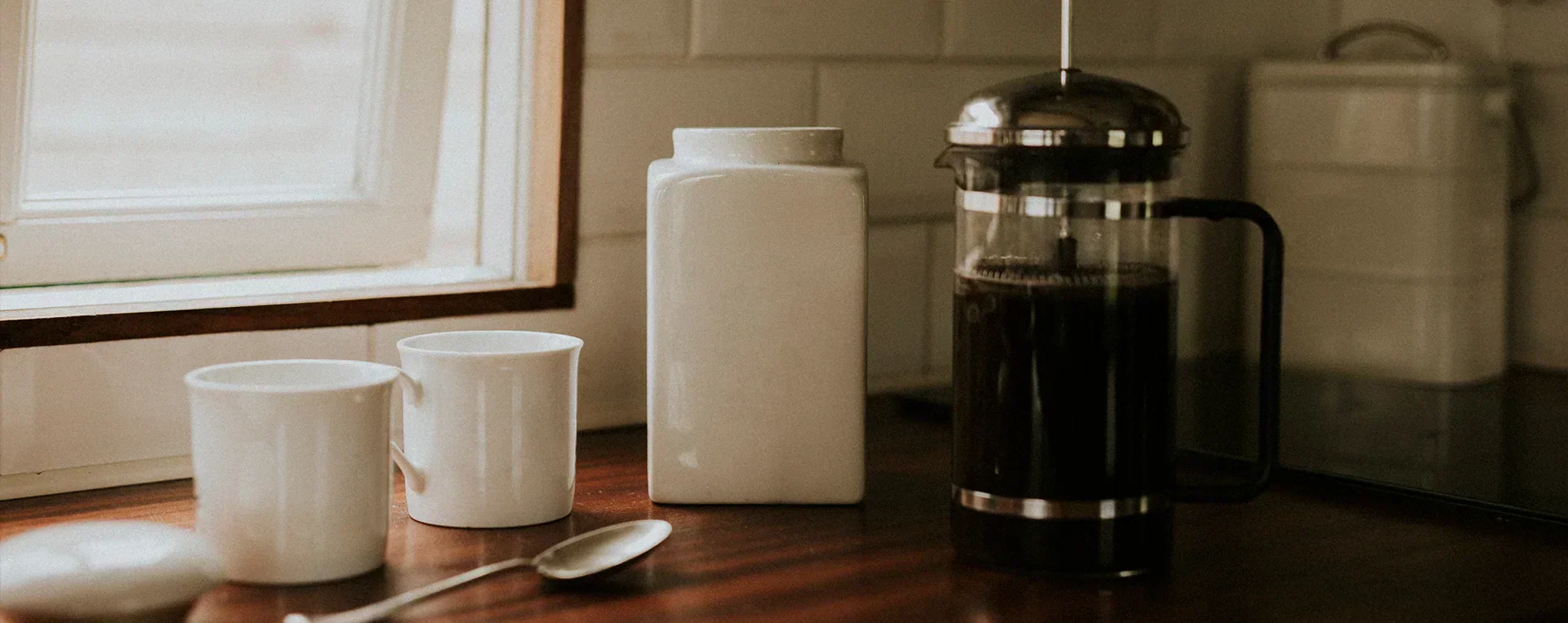
How to Make Coffee with a French Press
To make coffee with a French press, use a 1:15 ratio of coarse ground coffee to hot water, steep for 4 minutes at 200°F, then press the plunger slowly. For one standard cup, use 30 grams of coarsely ground specialty coffee with 450 grams of water heated to just below boiling. This immersion brewing method produces rich, full-bodied coffee with oils and sediment that paper filters remove.
French press coffee delivers bold flavor and thick body that drip coffee cannot match. The metal mesh filter allows coffee oils to remain in your cup. These oils carry flavor compounds and aromatics. Learning how to make coffee with a French press properly transforms your morning routine into a rich, satisfying ritual.
Quick Answer: French Press Coffee Basics
French press coffee requires coarse ground beans, hot water around 200°F, and 4 minutes of steeping time. Add coarse grounds to the press, pour hot water over them, stir once, wait 4 minutes, then press the plunger down slowly. The result is full-bodied specialty coffee with rich oils and deep flavor that paper-filtered methods cannot achieve.
What Makes French Press Coffee Special
French press coffee uses immersion brewing. The grounds sit in hot water for several minutes. This extended contact time extracts oils, flavors, and compounds thoroughly. Unlike pour over or drip coffee, nothing filters out the oils. You taste everything the coffee offers.
The metal mesh screen separates grounds from liquid but lets oils and fine particles through. This creates thick body and rich mouthfeel. Some sediment settles at the bottom of your cup. This is normal for French press coffee. The sediment contains flavor compounds paper filters would remove.
I tested French press coffee extensively using our Bodum Chambord press. Different variables changed the cup dramatically. Steep time affected strength and bitterness. Grind size controlled sediment and extraction. Water temperature impacted flavor clarity. Understanding these variables helps you make coffee with a French press consistently.
Equipment You Need for French Press Coffee
The French Press
A quality French press consists of a glass carafe, metal mesh plunger, and frame. Glass lets you see the brewing process. The plunger separates grounds from brewed coffee. Standard sizes range from 3-cup (12 oz) to 12-cup (51 oz).
I use a Bodum Chambord French press for all my testing. The borosilicate glass handles temperature changes without cracking. The stainless steel frame and mesh filter last for years with proper care. This press produces consistent results every time I make coffee with a French press.
Coffee Grinder
Fresh grinding matters critically for French press coffee. Pre-ground coffee goes stale within days. A burr grinder produces uniform coarse grounds. Blade grinders create uneven particles that extract poorly. Set your burr grinder to the coarsest setting for French press brewing.
French press showcases the difference between fresh-ground whole bean coffee and pre-ground coffee. Learn which option delivers better value in our complete comparison.
Kettle
Any kettle works for French press coffee. Temperature-controlled kettles maintain precise heat. Regular kettles require a thermometer to check temperature. Bring water to a boil, then let it cool for 30 seconds before pouring. This drops the temperature to the ideal 200°F range.
Scale and Timer
Measuring coffee and water by weight creates consistency. A digital scale ensures accurate ratios. A timer tracks steep time precisely. These simple tools eliminate guesswork when you make coffee with a French press.
How to Make Coffee with a French Press Step by Step
Step 1: Heat Your Water
Bring fresh, filtered water to a boil. Remove from heat and let it cool for 30 seconds. The target temperature is 195-205°F. Water that is too hot extracts bitter compounds. Water that is too cool under-extracts and tastes sour.
I tested water temperatures from 185°F to 212°F. Coffee brewed at 200°F delivered the best balance of sweetness and body. Lower temperatures tasted weak and acidic. Boiling water created harsh bitterness. The 195-205°F range works consistently across all roast levels.
Step 2: Measure and Grind Coffee
Weigh 30 grams of whole bean specialty coffee for a standard 16 oz French press. Grind the beans on the coarsest setting. The grounds should look like breadcrumbs or sea salt. Too fine creates sludge and bitter over-extraction. Too coarse tastes weak.
I tested five different grind sizes with our El Bandido Colombian coffee. Medium-coarse grounds produced the cleanest cup with minimal sediment. Coarser grinds brewed faster but tasted thin. Finer grinds extracted more flavor but created muddy texture. The sweet spot sits at coarse to medium-coarse.
Step 3: Add Coffee to French Press
Pour the coarse grounds into your French press. Shake gently to level the bed. This ensures even extraction during steeping. Uneven grounds create channeling where water flows through without extracting properly.
Step 4: Pour Water and Start Timer
Pour 450 grams of hot water over the grounds. Pour in a circular motion to saturate all grounds evenly. Start your timer immediately. The coffee will bloom and release carbon dioxide. This is normal and shows freshness.
Step 5: Stir Once
After 30 seconds, stir the coffee once with a wooden or plastic spoon. Metal spoons can chip glass. Stirring breaks up clumps and ensures full saturation. One gentle stir is enough. Over-stirring creates turbulence that increases sediment.
Step 6: Place Lid and Wait
Place the lid on the French press with the plunger pulled up. This retains heat during steeping. Wait for the timer to reach 4 minutes total. Resist the urge to press early. Proper extraction time matters.
I tested steep times from 3 to 6 minutes. Three minutes produced bright but thin coffee. Five minutes created strong but bitter cups. Six minutes tasted over-extracted and harsh. Four minutes delivered the best balance of strength, sweetness, and body across all specialty coffee we tested.
Step 7: Press Slowly
When the timer reaches 4 minutes, press the plunger down slowly and steadily. The entire press should take 20-30 seconds. Pressing too fast agitates grounds and creates sediment. Pressing too slowly lets coffee continue extracting and cool down.
Apply gentle, even pressure. If pressing feels very difficult, your grind is too fine. If the plunger drops with no resistance, your grind is too coarse. Proper coarse grounds create slight resistance during pressing.
Step 8: Pour Immediately
Pour your French press coffee immediately after pressing. Leaving coffee in the press continues extraction and creates bitterness. Pour into your cup or transfer to a thermal carafe. Enjoy within 10-15 minutes for best flavor.
French Press Coffee Ratios and Measurements
The golden ratio for French press coffee is 1:15 coffee to water by weight. This means 1 gram of coffee for every 15 grams of water. Some people prefer stronger coffee at 1:12 or weaker coffee at 1:17. Start with 1:15 and adjust to taste.
| French Press Size | Water Amount | Coffee Amount (1:15 Ratio) | Servings |
|---|---|---|---|
| 3-Cup (12 oz) | 350g | 23g | 1-2 cups |
| 4-Cup (16 oz) | 450g | 30g | 2 cups |
| 8-Cup (34 oz) | 950g | 63g | 4-5 cups |
| 12-Cup (51 oz) | 1425g | 95g | 6-7 cups |
Best Coffee for French Press
French press coffee works with any roast level, but certain coffees excel in this brewing method. The immersion process and metal filter favor specific flavor profiles.
El Bandido Colombian Coffee
Our El Bandido Colombian coffee performs exceptionally in French press. Colombian specialty coffee has naturally full body and balanced sweetness. The chocolate and caramel notes shine through French press extraction. The medium roast level provides enough oils for rich mouthfeel without overwhelming bitterness.
I tested El Bandido in French press against pour over and drip methods. French press highlighted the chocolate sweetness and smooth body. Pour over emphasized brightness and clarity. French press brought out the characteristics that make Colombian coffee special.
Jet Fuel Medium Roast
Medium roasts hit the sweet spot for French press coffee. They have enough body to create satisfying texture. The balanced roast profile lets origin characteristics come through. Jet Fuel delivers strong caffeine content with smooth flavor in French press brewing.
French Heist Dark Roast
Dark roasts were made for French press. The bold, rich character pairs perfectly with full immersion brewing. French Heist produces thick, satisfying coffee with deep roast notes. The oils from dark roasting create luxurious mouthfeel that French press preserves completely.
Original Medium Roast
Our Original blend provides well-rounded, classic French press coffee. The blend balances multiple origins for consistent flavor. This makes it perfect for daily French press brewing when you want reliable, delicious specialty coffee.
French Press Coffee by Roast Level
Different roast levels need different parameters when you make coffee with a French press. Roast darkness affects density, solubility, and extraction speed.
Light Roast in French Press
- Water Temperature: 205°F
- Grind Size: Medium-coarse (slightly finer than standard)
- Steep Time: 4:30-5:00 minutes
- Ratio: 1:16 (lighter ratio to avoid over-extraction)
Light roasts are dense and acidic. They need higher temperature and longer steeping to extract fully. The finer grind and extended time compensate for bean density. Light roast French press coffee showcases bright, complex flavors with good body.
Medium Roast in French Press
- Water Temperature: 200°F
- Grind Size: Coarse to medium-coarse
- Steep Time: 4:00 minutes
- Ratio: 1:15 (standard golden ratio)
Medium roasts work perfectly with standard French press parameters. The balanced roast level extracts evenly at moderate temperature. This is the easiest roast level for learning how to make coffee with a French press.
Dark Roast in French Press
- Water Temperature: 195°F
- Grind Size: Coarse
- Steep Time: 3:30-4:00 minutes
- Ratio: 1:14 (stronger ratio for bold flavor)
Dark roasts are porous and extract quickly. Lower temperature and coarser grind prevent bitter over-extraction. Slightly shorter steep time creates smooth, rich coffee without harshness. French Heist dark roast delivers incredible French press coffee with these parameters.
Common French Press Coffee Mistakes
Using Boiling Water
Boiling water at 212°F burns coffee and extracts bitter compounds aggressively. Always let water cool to 195-205°F before brewing. This temperature range extracts sweetness and flavor without harshness.
One customer complained their French press coffee always tasted bitter and burnt. They poured water straight from the kettle at full boil. I showed them how to let water cool for 30 seconds after boiling. Their next cup tasted completely different, smooth and sweet instead of harsh.
Grinding Too Fine
Fine grounds slip through the metal mesh filter. This creates muddy, sludgy coffee with excessive sediment. Fine grounds also over-extract quickly, producing bitter flavor. Always use coarse grounds similar to breadcrumbs when you make coffee with a French press.
Another customer struggled with gritty, undrinkable French press coffee. Their grinder was set to espresso fineness. We adjusted to the coarsest setting. The difference was immediate. Clear, clean coffee with minimal sediment.
Pressing Too Hard or Fast
Aggressive pressing agitates settled grounds. This kicks up sediment and creates cloudy coffee. Press slowly and gently over 20-30 seconds. Let gravity do most of the work. You should feel slight resistance but not strain.
Not Preheating the French Press
Cold glass drops water temperature significantly during brewing. This causes under-extraction and weak coffee. Preheat your French press by rinsing it with hot water before adding grounds. Discard the rinse water, then proceed with brewing.
Leaving Coffee in the Press
Coffee continues extracting even after pressing. Leaving it in the press for 15-20 minutes creates increasingly bitter coffee. Pour immediately after pressing. Transfer to a thermal carafe if not drinking right away.
French Press vs Other Brewing Methods
French Press vs Pour Over Coffee
French press produces full body with oils and sediment. Pour over delivers clean clarity with no oils. French press works best with medium and dark roast specialty coffee. Pour over highlights light and medium roasts beautifully.
Use French press when you want rich, bold coffee with thick mouthfeel. Use pour over when you want to taste subtle flavor notes and delicate aromatics. Both methods make excellent specialty coffee in different ways.
French Press vs Drip Coffee
French press gives you control over every variable. Drip coffee is automatic and convenient. French press coffee tastes richer and more complex. Drip coffee produces consistent results with less effort.
Choose French press for afternoon brewing when you have time to focus. Choose drip coffee for busy mornings when speed matters. French press coffee deserves attention. Drip coffee provides reliable convenience.
Troubleshooting French Press Coffee Problems
Coffee Tastes Bitter
Bitter French press coffee usually means over-extraction. Try these fixes: use coarser grounds, reduce steep time to 3:30, lower water temperature to 195°F, or use a lighter ratio like 1:16. One of these adjustments should solve bitterness.
Coffee Tastes Weak or Watery
Weak French press coffee indicates under-extraction. Solutions: use finer grounds (medium-coarse instead of coarse), increase steep time to 4:30, raise water temperature to 203°F, or strengthen ratio to 1:14. Test one change at a time to find the issue.
Too Much Sediment
Excessive sediment comes from grinding too fine or pressing too hard. Use coarser grounds and press slowly. Some sediment is normal and contains flavor. If the last few sips are too gritty, simply leave them in the cup.
Coffee Cools Too Fast
Preheat your French press and cups with hot water. This maintains temperature throughout brewing and drinking. Consider a thermal carafe for serving if brewing large batches.
Frequently Asked Questions About French Press Coffee
How to use a French press coffee maker step by step?
Add 30g coarse ground coffee to the press. Pour 450g of 200°F water over grounds. Stir once after 30 seconds. Place lid and wait 4 minutes. Press plunger slowly over 20-30 seconds. Pour immediately and enjoy. This ratio makes approximately 16 oz of French press coffee.
How much coffee do you add to a French press?
Use 30 grams of coarse ground coffee for a standard 16 oz French press. This follows the 1:15 golden ratio. For stronger coffee, use 35-40 grams. For weaker coffee, use 25 grams. Always measure by weight for consistency when you make coffee with a French press.
Is it 1 or 2 tablespoons of coffee per cup?
Use approximately 2 tablespoons of coarse ground coffee per 6 oz cup. However, measuring by weight is more accurate. One tablespoon equals roughly 5-7 grams depending on grind size and bean density. For precise French press coffee, use a scale and measure 30 grams per 450g water.
How long should coffee sit in a French press before pressing?
Coffee should steep for 4 minutes before pressing. This timing creates balanced extraction with good strength and sweetness. Three minutes produces weak coffee. Five or six minutes creates bitter over-extraction. Set a timer and press at exactly 4 minutes for best results.
How many scoops of coffee do I put in my French press?
Use 2-3 standard coffee scoops for a 16 oz French press. One scoop equals approximately 10 grams. For accurate measurement, weigh 30 grams of coarse ground specialty coffee. Scoops vary in size, so weighing produces more consistent French press coffee.
How much coffee do I use for 4 cups of water in a French press?
For 4 cups (32 oz or about 950g water), use 63 grams of coarse ground coffee. This maintains the 1:15 golden ratio. If you prefer stronger coffee, increase to 75-80 grams. Weaker coffee works with 55 grams.
What is the golden ratio of coffee to water in a French press?
The golden ratio is 1:15 coffee to water by weight. This means 1 gram of coffee for every 15 grams of water. For example, 30g coffee to 450g water. This ratio produces balanced French press coffee. Adjust between 1:12 (strong) and 1:17 (mild) based on preference.
What are the common French press mistakes?
Common mistakes include using boiling water (use 195-205°F instead), grinding too fine (use coarse grounds), pressing too hard (press slowly), not preheating the press (rinse with hot water first), and leaving coffee in the press after brewing (pour immediately). Avoiding these mistakes dramatically improves French press coffee quality.
What are the disadvantages of a French press?
French press coffee contains sediment and oils that some people dislike. It requires more effort than automatic drip coffee. The metal filter allows cafestol through, which may raise cholesterol in sensitive individuals. Brewing takes 5-6 minutes total. However, the rich flavor and full body outweigh these minor disadvantages for most specialty coffee lovers.
Is coffee better out of a French press?
French press coffee tastes different, not necessarily better. It produces fuller body, richer mouthfeel, and more oils than pour over or drip coffee. The immersion brewing extracts differently than filtered methods. Whether it is better depends on personal preference. Try French press and compare it to your current brewing method.
What is the 80/20 rule for coffee?
The 80/20 rule suggests that 80% of French press coffee quality comes from 20% of variables. Focus on fresh specialty coffee, correct grind size (coarse), proper water temperature (200°F), and accurate steep time (4 minutes). These four factors deliver most of the results. Master the basics before worrying about advanced techniques.
Which is healthier, French press or drip coffee?
Drip coffee filters out cafestol and kahweol through paper filters. These compounds raise LDL cholesterol levels. French press retains these oils. For people with cholesterol concerns, drip or pour over coffee is healthier. For others, both methods are equally healthy. Both contain the same beneficial antioxidants and compounds.
What is the healthiest method of coffee making?
Paper-filtered methods like pour over and drip coffee are healthiest for cholesterol management. They remove cafestol and kahweol oils. French press, espresso, and Turkish coffee retain these oils. However, all coffee provides antioxidants and health benefits. Choose your brewing method based on taste preference unless you have specific cholesterol concerns.
Master French Press Coffee for Rich, Bold Specialty Coffee
Learning how to make coffee with a French press opens up a world of rich, full-bodied specialty coffee. The immersion brewing method extracts oils and flavors that paper filters remove. The result is thick, satisfying coffee with complex taste.
Start with quality equipment. A Bodum Chambord French press provides consistent results for years. Use fresh specialty coffee roasted within 14-21 days. Grind coarse right before brewing. Measure accurately using the 1:15 golden ratio. Heat water to 200°F. Steep for exactly 4 minutes. Press slowly and pour immediately.
My testing proved that these parameters work across all roast levels with minor adjustments. El Bandido Colombian coffee delivers exceptional French press results with chocolate sweetness and full body. Jet Fuel medium roast provides strong caffeine with smooth flavor. French Heist dark roast creates bold, rich coffee perfect for afternoon brewing. Original blend offers reliable daily French press coffee.
French press coffee takes practice. Your first attempts might taste too strong or too weak. Each brew teaches you about timing, temperature, and extraction. Soon the process becomes automatic. You will make coffee with a French press confidently every time.
The thick body and rich oils of French press coffee are worth the effort. No other brewing method delivers this combination of boldness and complexity. When you make coffee with a French press correctly, you taste everything specialty coffee has to offer. That is the magic of immersion brewing.
Sources and References
- Specialty Coffee Association. (2024). "Brewing Protocols and Best Practices for Coffee." Specialty Coffee Association.
- National Coffee Association. (2024). "How to Brew Coffee: Comprehensive Brewing Guide." National Coffee Association USA.
- Cordoba, N., et al. (2019). "Coffee extraction: A review of parameters and their influence on the physicochemical characteristics and flavour of coffee brews." Trends in Food Science & Technology, 96, 45-60. DOI: 10.1016/j.tifs.2019.12.004
- Petracco, M. (2001). "Technology IV: Beverage Preparation: Brewing Trends." In Coffee: Recent Developments (pp. 140-164). Blackwell Science. DOI: 10.1002/9780470690499.ch7
- Rao, N. Z., & Fuller, M. (2018). "Acidity and antioxidant activity of cold brew coffee." Scientific Reports, 8(1), 16030. DOI: 10.1038/s41598-018-34392-w
- Batali, M. E., et al. (2020). "Brew temperature, at fixed brew strength and extraction, has little impact on the sensory profile." Scientific Reports, 10(1), 16450. DOI: 10.1038/s41598-020-73341-4
- Coffee Quality Institute. (2023). "Coffee Evaluation Standards and Sensory Analysis." Coffee Quality Institute.
- Mestdagh, F., et al. (2014). "The kinetics of coffee aroma extraction." Food Research International, 63, 271-274. DOI: 10.1016/j.foodres.2014.03.011
- World Coffee Research. (2024). "Coffee Brewing Methods and Extraction Science." World Coffee Research.
- Sunarharum, W. B., Williams, D. J., & Smyth, H. E. (2014). "Complexity of coffee flavor: A compositional and sensory perspective." Food Research International, 62, 315-325. DOI: 10.1016/j.foodres.2014.02.030
- Sanchez, K., & Chambers, E. (2015). "How does product preparation affect sensory properties? An example with coffee." Journal of Sensory Studies, 30(6), 499-511. DOI: 10.1111/joss.12184
- Caporaso, N., et al. (2014). "Variability of single serve coffee volatile compounds." Food Research International, 64, 81-88. DOI: 10.1016/j.foodres.2014.06.021
- European Coffee Brewing Centre. (2023). "European Coffee Brewing Standards and Guidelines." European Coffee Brewing Centre.
- Urgessa, G. K., et al. (2019). "Optimization of coffee brewing methods to reduce acrylamide content." Food Chemistry, 286, 40-48. DOI: 10.1016/j.foodchem.2019.01.168
Disclaimer: This article provides general information about French press coffee brewing. Results may vary based on coffee origin, roast level, water quality, equipment, and personal preferences. Temperature and timing recommendations represent typical optimal ranges. Always prioritize safety when handling hot water and glass equipment. Individual taste preferences vary, adjust brewing parameters to suit your palate. This content is for educational purposes and does not constitute professional advice.

Written by Gabe Hollins

Leave a comment
This site is protected by hCaptcha and the hCaptcha Privacy Policy and Terms of Service apply.